

By Straight Line Painting & Remodeling Editorial Team · Updated 2026-08-19
Semi-gloss and satin acrylic-latex paints deliver the best results for kitchens and bathrooms. Higher gloss levels create a tighter molecular structure that resists moisture and repeated scrubbing. Straight Line Painting & Remodeling applies these durable finishes on walls, trim, and cabinets throughout Southeast Wisconsin homes, protecting surfaces against humidity, splashes, and daily wear for years of lasting performance.
Key Takeaways
- Semi-gloss and satin acrylic-latex paints resist moisture and scrubbing best, making them the top choice for kitchen and bathroom walls, trim, and cabinets.
- Thorough prep — cleaning, sanding glossy surfaces, and spot-priming stains or patched drywall — determines whether a finish lasts for years or fails within months.
- The painting sequence matters: protect surfaces first, then clean, sand, prime, apply moisture resistant paint in thin even coats, and let each layer cure fully.
- Semi-gloss and satin finishes hold up best directly around sinks, tubs, and stovetops, while matte paint remains suitable for ceilings and low-moisture areas.
- Common failures — skipped prep, wrong sheen, rushed cure times, and treating cabinets like ordinary walls — all trace back to inadequate planning.
- No kitchen or bathroom project is too small for careful planning and professional-grade craftsmanship.
What Do You Need Before Painting Kitchen And Bathroom Walls?
Preparation determines whether a kitchen or bathroom finish lasts five years or fifty. Straight Line Painting & Remodeling builds every project around homeowners who value detail, durability, and professionalism in the final surface. Skipping prep work invites peeling, bubbling, and mildew — problems that cost far more to fix later than to prevent now.
Southeast Wisconsin homeowners tackling a kitchen bathroom paint guide project should gather the following before opening a single can:
- Painter’s tape, plastic sheeting, and drop cloths to protect cabinetry and flooring
- TSP cleaner or a degreasing solution for kitchen backsplashes and range areas
- 120-grit sandpaper for scuffing glossy trim and cabinet surfaces
- A quality primer rated for high-humidity rooms
- Moisture resistant paint in semi-gloss or satin sheen
What Type of Paint Resists Water Best?
High-gloss acrylic-latex and oil-based paints resist water better than apartment or matte finishes. Gloss levels tighten the paint’s molecular structure, sealing the surface against steam and splashes. Semi-gloss and satin sheens offer a practical middle ground for walls that need scrubbing without a mirror-like shine.
How Should Walls Be Prepped Beforehand?
Clean surfaces thoroughly, then sand any glossy spots to help primer grip. Fill cracks or nail holes before priming. This groundwork supports clean lines and a smooth, lasting finish. Exactly what quality interior painting delivers in rooms that face daily moisture and heavy use.

How Do You Paint Kitchen And Bathroom Surfaces?
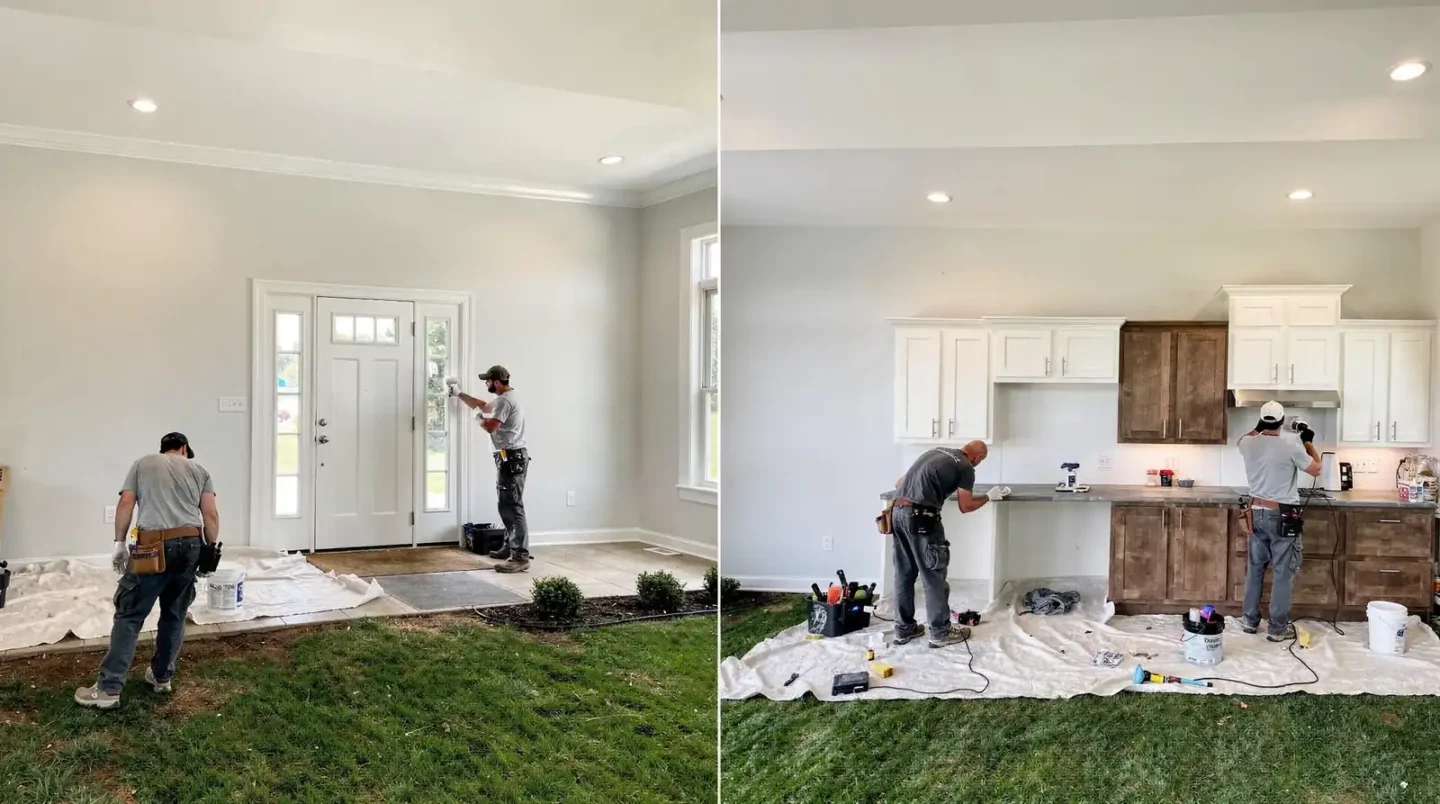
Correct sequencing separates a paint job that lasts from one that peels within a year. Kitchens and bathrooms endure grease, steam, and daily scrubbing, so surface prep and finish selection carry more weight than in a bedroom or hallway. Straight Line Painting & Remodeling treats these rooms with the same discipline used on high-end residential projects, applying that level of precision from the first prep step to the final coat.
The process follows a clear sequence:
- Clear counters, remove hardware, and protect flooring and fixtures.
- Wash walls, trim, and cabinet surfaces to strip grease and soap residue.
- Sand glossy or damaged spots so new paint bonds properly.
- Spot-prime stains, patched drywall, and bare wood.
- Apply a moisture resistant paint in thin, even coats, allowing full drying time between layers.
- Reinstall hardware and fixtures once the final coat has cured.
What Finish Works Best Near Sinks And Tubs?
Semi-gloss and satin-gloss finishes outperform apartment or matte paint around sinks, tubs, and stovetops. Their tighter surface structure sheds water and steam rather than absorbing it, which cuts down on staining and mildew. Matte paint still suits ceilings or hallway transitions away from direct moisture.
How Should Homeowners Choose Paint For These Rooms?
Selecting the right sheen and coverage matters as much as color when working through a kitchen bathroom paint guide for walls, trim, and cabinets. A full-service painting company serving the greater Milwaukee area can typically address all three surfaces in one project scope, avoiding mismatched finishes down the line.
Homeowners following this how to paint bathroom walls process can expect clear communication, dependable scheduling, and consistent results from an experienced team, start to finish.
What Mistakes Should You Avoid When Painting?
Five errors ruin most kitchen and bathroom paint jobs before the roller even comes out. Skipping prep work, choosing the wrong sheen, rushing cure times, ignoring moisture exposure, and treating cabinets like ordinary walls all shorten a finish’s lifespan. Each mistake traces back to one root cause: a missing foundation of careful planning and customer-focused craftsmanship.
How to paint bathroom walls without early failure starts with respecting moisture. Steam and splashback punish apartment paint fast, so a moisture resistant paint with a higher sheen belongs on any wall near a tub or sink. Cabinets deserve the same scrutiny. Not every paint holds up to daily use, and the wrong choice shows wear within months rather than years.
Why does a small paint job still need a full plan?
No kitchen or bathroom project is too small for careful planning. A single vanity or accent wall still deserves proper prep. Jobs outside a contractor’s scope should go to a trusted network of qualified professionals rather than a rushed shortcut.
A clean, well-executed interior leaves a lasting impression on anyone who enters the room. Reason enough to follow a proper kitchen bathroom paint guide instead of skipping steps.
Conclusion
In closing, selecting the right paint for kitchens and bathrooms demands thoughtful consideration of moisture resistance, durability, and finish quality. The proper choice protects your investment while maintaining the aesthetic appeal of these high-traffic spaces for years to come. By prioritizing proven formulations and expert application, you ensure that your kitchen and bathroom surfaces withstand daily wear while retaining their beauty and integrity. Quality paint, paired with meticulous preparation and skilled craftsmanship, transforms these essential rooms into spaces that endure.
Frequently Asked Questions
What is the best paint finish for kitchens and bathrooms?
Semi-gloss and satin acrylic-latex paints work best for kitchens and bathrooms. Their tighter molecular structure resists moisture, steam, and repeated scrubbing far better than flat or matte finishes, making them ideal for walls, trim, and cabinets in high-humidity rooms.
Should I choose semi-gloss or satin for kitchen walls?
Semi-gloss holds up best directly around sinks, tubs, and stovetops where splashing and steam are constant, while satin offers a softer sheen with strong scrubbability for the rest of the kitchen or bathroom. Both outperform matte paint in moisture resistance, so the choice often comes down to how much shine you want on the wall.
Why does moisture resistant paint matter so much in these rooms?
Kitchens and bathrooms face daily steam, splashback, and cleaning that ordinary wall paint can’t withstand. Moisture resistant paint seals the surface rather than absorbing water, which prevents staining, peeling, and mildew growth over time.
How important is prep work before painting a kitchen or bathroom?
Prep work is the single biggest factor in how long a finish lasts. Cleaning grease and soap residue, sanding glossy surfaces, and priming stains or patched drywall gives the paint a surface it can properly bond to, preventing peeling and bubbling down the road.
Does Straight Line Painting & Remodeling handle small kitchen or bathroom projects?
Yes. No project is too small for careful planning, whether it’s a single vanity or a full kitchen. Straight Line Painting & Remodeling brings the same level of prep and craftsmanship to every job across Southeast Wisconsin, and refers work outside its scope to a trusted network of qualified professionals.